The Patentability of Traditional Knowledge under the Indian Patents Act, 1970: An Analysis of Section 3(p) and Defensive Protection Mechanisms

Traditional Knowledge (TK) refers to the accumulated wisdom, practices, and innovations of indigenous and local communities, often passed down orally or through codified texts over generations. India is well known for its traditional systems such as Ayurvedic, Siddha, Unani, and folk traditions. Indigenous systems rely on medicinal uses of plants like turmeric, neem, and ashwagandha and take a holistic approach for treatment and cure. The patent regime is designed to reward novelty, inventive step, and industrial applicability but excludes pure TK from protection due to its public domain nature and with an intent to leave it free.
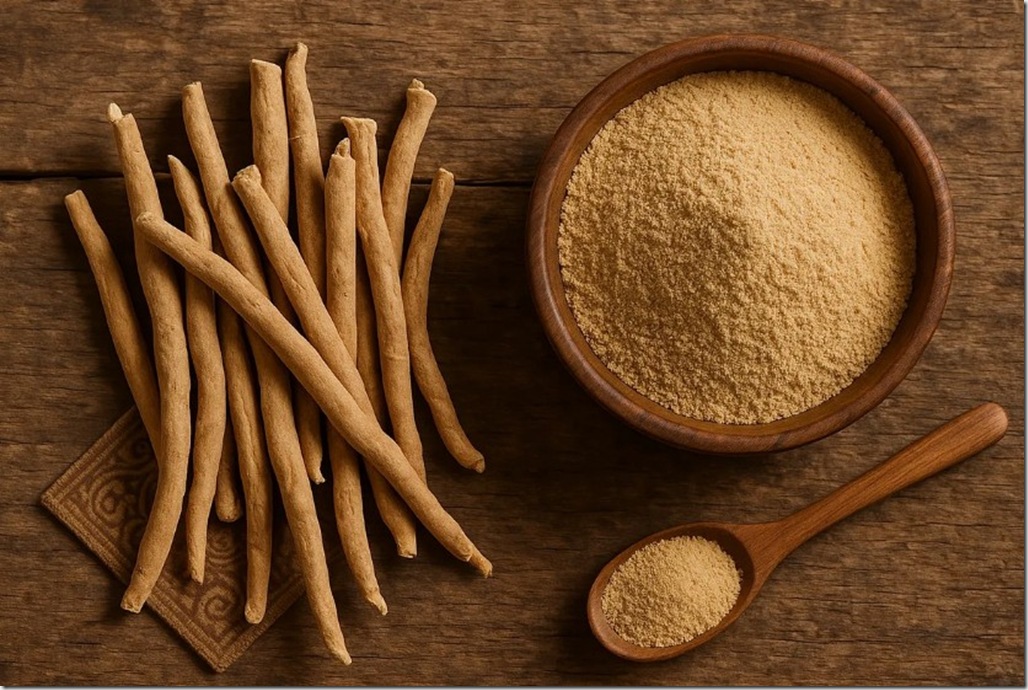
TKDL_India

The Patents Act, 1970 (as amended) explicitly addresses this through Section 3(p), which states that “an invention which in effect, is traditional knowledge or which is an aggregation or duplication of known properties of traditionally known component or components” is not an invention and hence not patentable. This provision acts as a defensive safeguard against biopiracy which is misappropriation of TK by vested parties seeking monopolies. It prevents patents on mere rediscoveries or simple combinations of existing herbal formulations, such as basic uses of turmeric for wound healing or neem as a pesticide.

Section 3(p) works alongside other exclusions in Section 3, such as 3(e) (mere admixtures) and requirements under Section 10(4)(d) for disclosing the source and geographical origin of biological material. Patent examiners consider TK as prior art, rendering claims lacking novelty or inventive step unpatentable. For inventions which appear to relate to TK, the examiners conduct prior art searches to establish if the invention is already known in the prior art.

A cornerstone of India’s strategy in the protection of TK is the Traditional Knowledge Digital Library (TKDL), launched in 2001 by CSIR and the Ministry of AYUSH. The TKDL digitizes and translates ancient texts into multiple languages (English, French, German, etc.) in patent-friendly formats. It has enabled international patent offices to access Indian TK as prior art. As a result, a large number of patent applications worldwide have been rejected, withdrawn, or amended. India has signed access agreements with over 17 patent offices, including the EPO, USPTO, and JPO.

There have been several high profile cases wherein patents relating to TK were overturned. In the Turmeric Patent (US Patent 5,401,504), the USPTO initially granted rights for wound-healing properties, but the CSIR opposed the patent and successfully had it revoked in 1997 by citing ancient Sanskrit texts and prior publications. The Neem case saw opposition to a European patent on neem oil fungicide, leading to revocation on grounds of lack of novelty. The Basmati rice dispute involved challenging a US patent on hybrid strains, protecting India’s geographical indications and export interests.

While pure TK remains non-patentable, value-added innovations derived from TK can qualify if they demonstrate substantial inventive steps, enhanced efficacy, or novel processes. There have been precedents set by courts in this matter. Recent Madras High Court rulings emphasize that inventions must go beyond “in effect” TK to be eligible.

There are still some challenges. These include documentation gaps, proving inventive step in incremental improvements, and balancing community rights with modern R&D. India’s approach aligns with international frameworks like the CBD (Convention on Biological Diversity) and TRIPS, prioritizing defensive protection while encouraging benefit-sharing.

In conclusion, India’s patent regime robustly protects TK from exploitation through statutory bars, digital tools like TKDL, and proactive litigation. It strikes a balance between preserving cultural heritage and fostering genuine innovation, serving as a global model against biopiracy.

Who can apply for a patent in India?

An application for a patent for an invention i.e. a patent application can be filed by any of the following persons, either alone or jointly with any other eligible person/persons:

  • The true and first inventor of the invention.
  • The assignee of the true and first inventor (in respect of the right to apply for the patent).
  • The legal representative of any deceased true and first inventor (or of their assignee), where the deceased person was entitled to apply immediately before their death.

Key definitions and clarifications:

  • The term “person” includes both natural persons (individuals) and legal entities such as the Government, registered companies, small entities, startups, research organizations, or educational institutions.
  • “True and first inventor” refers to the person who actually conceived the invention. It does not include:
    • The first importer of the invention into India, or
    • A person to whom the invention was first communicated from outside India.
  • The applicant must disclose the name, address, and nationality of the true and first inventor(s) in the application.
  • “Assignee” can be any natural person or legal entity (as listed above). It also includes an assignee of an assignee (chain of assignments).
  • “Natural person” means an individual or group of individuals.
  • “Other than natural person” refers to entities like companies, startups, research organizations, educational institutes, or the Government.
  • “Legal representative” means a person who legally represents the estate of a deceased person (e.g., executor, heir, or administrator).

Proof of right requirements (when the applicant is not the inventor):

  • If the inventor(s) is/are not the applicant(s), the applicant must submit proof of right to apply for the patent. This can be:
    • An endorsement in the appropriate section of Form-1, or
    • A duly authenticated/notarized assignment deed from the inventor(s) in favor of the applicant(s).
  • This proof must be filed within 6 months from the date of filing the application in India.
  • The requirement applies to both national applications and Convention/National Phase (PCT) applications entering India.

Jurisdiction of Patent Offices in India

The Indian Patent Office operates from four branches i.e. Kolkata, Delhi, Chennai, and Mumbai. The Kolkata patent office serves as the headquarters. Unlike many other countries with a single central office, India operates from these four locations. All patent-related procedures are handled across these offices.

A patent application must be filed at the appropriate Patent Office based on the territorial jurisdiction, determined by the following criteria (in order of priority, as per Rule 4 of the Patents Rules, 2003):

  • The place of residence, domicile, or principal place of business of the applicant (or the first-named applicant in case of joint applicants), or
  • The place where the invention actually originated, or
  • For foreign applicants (with no residence, domicile, or place of business in India), the address for service in India provided by the applicant (typically the address of their duly appointed Indian patent agent).

Additionally, any divisional application (under Section 16 of the Patents Act, 1970) must be filed at the same appropriate office as the original (parent) application.

The current territorial jurisdictions of the patent offices are:

  • Mumbai: Covers the states of Maharashtra, Gujarat, Madhya Pradesh, Goa, and Chhattisgarh, along with the Union Territories of Daman & Diu and Dadra & Nagar Haveli.
  • Delhi (New Delhi branch): Covers the states of Haryana, Himachal Pradesh, Punjab, Rajasthan, Uttar Pradesh, Uttarakhand, along with the National Capital Territory of Delhi, and the Union Territories of Chandigarh, Jammu & Kashmir, and Ladakh.
  • Chennai: Covers the states of Andhra Pradesh, Karnataka, Kerala, Tamil Nadu, and Telangana, along with the Union Territories of Puducherry (Pondicherry) and Lakshadweep.
  • Kolkata: Covers the rest of India including states such as Bihar, Jharkhand, Odisha, West Bengal, Sikkim, Assam, Meghalaya, Manipur, Tripura, Nagaland, Arunachal Pradesh, and the Union Territory of Andaman & Nicobar Islands.

Once filed, the jurisdiction of the appropriate office is generally not changed. However, the Controller may reallocate an application to any of the four offices if it is deemed necessary.

All applicants (including foreign ones) and their patent agents must provide an address for service in India, which should include a postal address, an email address, and a mobile number registered in India. This address is used for all official communications and proceedings under the Patents Act and Rules.