Bombay High Court Insists on Reasoned Refusals in Atomic Energy Patent Application Appeal

Huntington Alloys Corporation versus Union of India & Ors. (2026:BHC-OS:9464-DB)

In a notable decision emphasizing the principles of natural justice and administrative transparency, the Bombay High Court has set aside a patent refusal order issued on the ground that the invention related to atomic energy. The decision underscores that even in sensitive areas involving atomic energy and national security, the government authorities must provide reasoned justifications in their orders when rejecting patent applications.
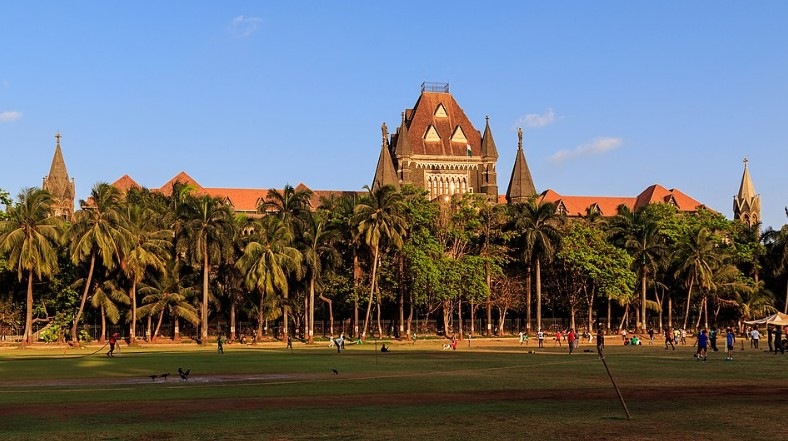
bombay_high_court


Background of the Case

The case involved Huntington Alloys Corporation (a US-based company), which filed a patent application for an industrial alloy designed for use in high-temperature boiler systems. During the examination process, the Controller of Patents referred the application to the Department of Atomic Energy (DAE) under Section 4 of the Patents Act, 1970, which prohibits the grant of patents for inventions relating to atomic energy as defined under Section 20(1) of the Atomic Energy Act, 1962.

In April 2021, the DAE issued a brief, one-paragraph opinion stating that the invention “does relate to Atomic Energy” and directed the Patent Office to reject the application. The Deputy Controller subsequently rejected the patent without providing any detailed technical reasoning or analysis. Aggrieved by the rejection of their patent application and a lack of transparency, Huntington Alloys moved the Bombay High Court via a writ petition.


Court’s Key Observations

The Division Bench of the Bombay High Court, comprising Justices Bharati Dangre and Manjusha Deshpande, examined three primary issues:

  • Whether a patent refusal under Section 4 can be sustained without adequate reasons.
  • Whether the Department of Atomic Energy (DAE)’s determination that an invention “relates to atomic energy” must be supported by reasoning, despite the government’s final authority on the matter.
  • Whether the absence of reasons violated the applicant’s rights under Section 65(2) of the Patents Act, particularly the opportunity to amend the specification.

The Court held that while Section 4 imposes a statutory bar on inventions relating to atomic energy, the exercise of this power cannot be arbitrary or unreasoned. A cryptic order merely repeating the statutory language fails to meet the standards of administrative law and prevents the applicant from understanding the basis of rejection or effectively challenging it.

The judgment aligns with a consistent line of rulings from various High Courts emphasizing that every adverse administrative order affecting valuable intellectual property rights must be reasoned. The Court also permitted the petitioner to submit additional materials for fresh consideration.


Significance of the Ruling

This decision strengthens procedural safeguards in India’s patent regime, particularly for technologies relating to sensitive areas. It sets a clear precedent for the Patent Office and DAE that blanket refusals without technical justification are unsustainable.

For inventors and corporations working in advanced materials, nuclear-adjacent technologies, or high-performance alloys, the Court order provides greater predictability and transparency. It also highlights the evolving balance between national security interests and the need for reasoned governance in intellectual property matters.

The Bombay High Court ordered the DAE and Patent Office to reconsider the application afresh through a reasoned order, effectively remanding the matter for proper adjudication.

This judgment is expected to influence future cases involving Section 4 refusals and reinforces India’s commitment to transparent administrative practices even in strategically sensitive sectors.
The Patentability of Traditional Knowledge under the Indian Patents Act, 1970: An Analysis of Section 3(p) and Defensive Protection Mechanisms

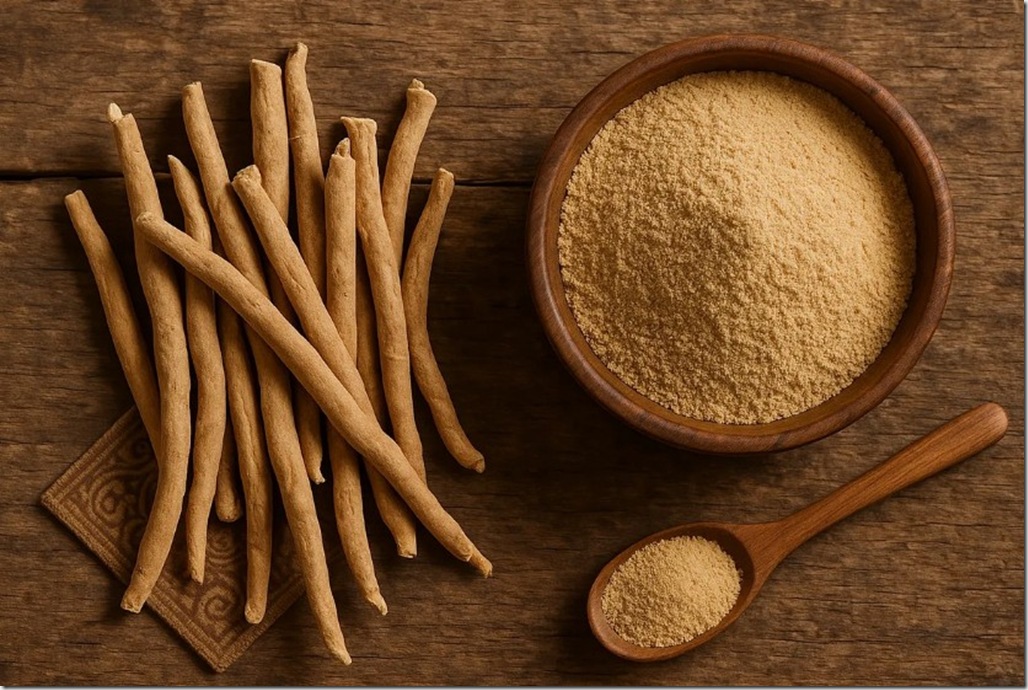
Traditional Knowledge (TK) refers to the accumulated wisdom, practices, and innovations of indigenous and local communities, often passed down orally or through codified texts over generations. India is well known for its traditional systems such as Ayurvedic, Siddha, Unani, and folk traditions. Indigenous systems rely on medicinal uses of plants like turmeric, neem, and ashwagandha and take a holistic approach for treatment and cure. The patent regime is designed to reward novelty, inventive step, and industrial applicability but excludes pure TK from protection due to its public domain nature and with an intent to leave it free.

TKDL_India

The Patents Act, 1970 (as amended) explicitly addresses this through Section 3(p), which states that “an invention which in effect, is traditional knowledge or which is an aggregation or duplication of known properties of traditionally known component or components” is not an invention and hence not patentable. This provision acts as a defensive safeguard against biopiracy which is misappropriation of TK by vested parties seeking monopolies. It prevents patents on mere rediscoveries or simple combinations of existing herbal formulations, such as basic uses of turmeric for wound healing or neem as a pesticide.

Section 3(p) works alongside other exclusions in Section 3, such as 3(e) (mere admixtures) and requirements under Section 10(4)(d) for disclosing the source and geographical origin of biological material. Patent examiners consider TK as prior art, rendering claims lacking novelty or inventive step unpatentable. For inventions which appear to relate to TK, the examiners conduct prior art searches to establish if the invention is already known in the prior art.

A cornerstone of India’s strategy in the protection of TK is the Traditional Knowledge Digital Library (TKDL), launched in 2001 by CSIR and the Ministry of AYUSH. The TKDL digitizes and translates ancient texts into multiple languages (English, French, German, etc.) in patent-friendly formats. It has enabled international patent offices to access Indian TK as prior art. As a result, a large number of patent applications worldwide have been rejected, withdrawn, or amended. India has signed access agreements with over 17 patent offices, including the EPO, USPTO, and JPO.

There have been several high profile cases wherein patents relating to TK were overturned. In the Turmeric Patent (US Patent 5,401,504), the USPTO initially granted rights for wound-healing properties, but the CSIR opposed the patent and successfully had it revoked in 1997 by citing ancient Sanskrit texts and prior publications. The Neem case saw opposition to a European patent on neem oil fungicide, leading to revocation on grounds of lack of novelty. The Basmati rice dispute involved challenging a US patent on hybrid strains, protecting India’s geographical indications and export interests.

While pure TK remains non-patentable, value-added innovations derived from TK can qualify if they demonstrate substantial inventive steps, enhanced efficacy, or novel processes. There have been precedents set by courts in this matter. Recent Madras High Court rulings emphasize that inventions must go beyond “in effect” TK to be eligible.

There are still some challenges. These include documentation gaps, proving inventive step in incremental improvements, and balancing community rights with modern R&D. India’s approach aligns with international frameworks like the CBD (Convention on Biological Diversity) and TRIPS, prioritizing defensive protection while encouraging benefit-sharing.

In conclusion, India’s patent regime robustly protects TK from exploitation through statutory bars, digital tools like TKDL, and proactive litigation. It strikes a balance between preserving cultural heritage and fostering genuine innovation, serving as a global model against biopiracy.