Bombay High Court Insists on Reasoned Refusals in Atomic Energy Patent Application Appeal

Huntington Alloys Corporation versus Union of India & Ors. (2026:BHC-OS:9464-DB)

In a notable decision emphasizing the principles of natural justice and administrative transparency, the Bombay High Court has set aside a patent refusal order issued on the ground that the invention related to atomic energy. The decision underscores that even in sensitive areas involving atomic energy and national security, the government authorities must provide reasoned justifications in their orders when rejecting patent applications.
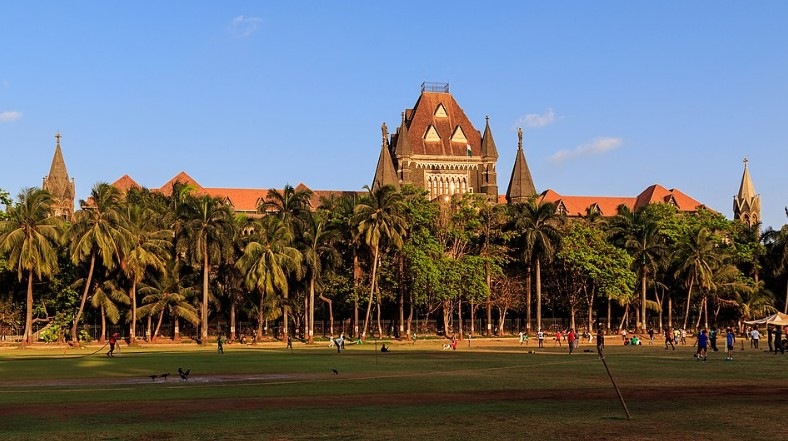
bombay_high_court


Background of the Case

The case involved Huntington Alloys Corporation (a US-based company), which filed a patent application for an industrial alloy designed for use in high-temperature boiler systems. During the examination process, the Controller of Patents referred the application to the Department of Atomic Energy (DAE) under Section 4 of the Patents Act, 1970, which prohibits the grant of patents for inventions relating to atomic energy as defined under Section 20(1) of the Atomic Energy Act, 1962.

In April 2021, the DAE issued a brief, one-paragraph opinion stating that the invention “does relate to Atomic Energy” and directed the Patent Office to reject the application. The Deputy Controller subsequently rejected the patent without providing any detailed technical reasoning or analysis. Aggrieved by the rejection of their patent application and a lack of transparency, Huntington Alloys moved the Bombay High Court via a writ petition.


Court’s Key Observations

The Division Bench of the Bombay High Court, comprising Justices Bharati Dangre and Manjusha Deshpande, examined three primary issues:

  • Whether a patent refusal under Section 4 can be sustained without adequate reasons.
  • Whether the Department of Atomic Energy (DAE)’s determination that an invention “relates to atomic energy” must be supported by reasoning, despite the government’s final authority on the matter.
  • Whether the absence of reasons violated the applicant’s rights under Section 65(2) of the Patents Act, particularly the opportunity to amend the specification.

The Court held that while Section 4 imposes a statutory bar on inventions relating to atomic energy, the exercise of this power cannot be arbitrary or unreasoned. A cryptic order merely repeating the statutory language fails to meet the standards of administrative law and prevents the applicant from understanding the basis of rejection or effectively challenging it.

The judgment aligns with a consistent line of rulings from various High Courts emphasizing that every adverse administrative order affecting valuable intellectual property rights must be reasoned. The Court also permitted the petitioner to submit additional materials for fresh consideration.


Significance of the Ruling

This decision strengthens procedural safeguards in India’s patent regime, particularly for technologies relating to sensitive areas. It sets a clear precedent for the Patent Office and DAE that blanket refusals without technical justification are unsustainable.

For inventors and corporations working in advanced materials, nuclear-adjacent technologies, or high-performance alloys, the Court order provides greater predictability and transparency. It also highlights the evolving balance between national security interests and the need for reasoned governance in intellectual property matters.

The Bombay High Court ordered the DAE and Patent Office to reconsider the application afresh through a reasoned order, effectively remanding the matter for proper adjudication.

This judgment is expected to influence future cases involving Section 4 refusals and reinforces India’s commitment to transparent administrative practices even in strategically sensitive sectors.

Top 10 Landmark Patent Case Laws in India

India’s patent system, governed by the Patents Act, 1970, has evolved through judicial interpretations that have made it more robust and exhaustive. Landmark cases have clarified concepts like inventive step, evergreening, compulsory licensing, infringement doctrines, and speedy trials. These rulings have shaped India’s position as a global generics hub and innovation destination.

Here are the top 10 landmark patent cases in India. These cases have been selected for their precedent-setting impact, citations in legal discourse, and contributions to the key doctrines of patentability. 

1. Biswanath Prasad Radhey Shyam v. Hindustan Metal Industries (1979)

Facts: A patent was granted for a simple device used in manufacturing utensils. The invention was challenged as lacking novelty and inventive step.  

Key Issue: What constitutes an “inventive step” under Section 2(1)(j)?  

Judgment: The Supreme Court revoked the patent, laying down the classic test: an invention must not be obvious to a person skilled in the art. Mere workshop improvements or known combinations do not qualify.  

Impact: This remains the foundational case for examining patent validity and obviousness in India. It set a high bar against frivolous patents.

2. Monsanto Company v. Coromandal Indag Products (1986)

Facts: Monsanto claimed patents over herbicide compositions containing Butachlor. The defendant argued the active ingredient and emulsification process were already publicly known.  

Key Issue: Novelty of known substances formulated in obvious ways.  

Judgment: The Supreme Court revoked the patents under Section 64, holding that Butachlor was globally known and emulsification was a standard process—not an invention.  

Impact: Reinforced that patents cannot be granted for mere discoveries or obvious formulations, influencing agrochemical and pharma cases.

3. Bajaj Auto Ltd. v. TVS Motor Company Ltd. (2009)

Facts: Bajaj sued TVS for infringing its patented DTS-i (Digital Twin Spark Ignition) technology used in motorcycles.  

Key Issue: Interim injunctions in patent suits and the need for speedy trials; application of the Doctrine of Equivalence.  

Judgment: The Supreme Court directed day-to-day hearings and disposal within months, emphasizing that IPR disputes affect national interest and public at large. The Madras High Court later upheld Bajaj’s patent using the “pith and marrow” test.  

Impact: Established the principle of expeditious resolution of patent disputes; widely cited for interim relief standards.

4. F. Hoffmann-La Roche Ltd. v. Cipla Ltd. (2012)

Facts: Roche sued Cipla over generic “Erlocip” (Erlotinib/Tarceva) for lung cancer, seeking an interim injunction.  

Key Issue: Patent infringement vs. public interest and affordability of life-saving drugs.  

Judgment: The Delhi High Court denied the interim injunction, requiring Cipla to maintain accounts and give undertakings. Public health considerations outweighed strict enforcement.  

Impact: Highlighted India’s pro-access stance in pharma; set precedents for balancing monopoly with generic entry.

5. Novartis AG v. Union of India (2013)

Facts: Novartis sought a patent for the beta-crystalline form of Imatinib Mesylate (Glivec/Gleevec), an anti-cancer drug.  

Key Issue: Interpretation of Section 3(d)–whether incremental innovations showing “enhanced therapeutic efficacy” qualify for patents (anti-evergreening).  

Judgment: The Supreme Court upheld the Patent Office’s rejection, ruling Section 3(d) is TRIPS-compliant and essential to prevent evergreening. Minor modifications without proven efficacy gains are not patentable.  

Impact: One of India’s most globally discussed rulings; cemented India’s leadership in affordable medicines and influenced pharma strategies worldwide.

6. Bayer Corporation v. Natco Pharma Ltd. / Union of India (2014)

Facts: Bayer’s patented cancer drug Nexavar (Sorafenib) cost ₹2.8 lakh/month. Natco applied for a compulsory licence.  

Key Issue: Grounds for compulsory licensing under Section 84 (public requirements not met, unaffordable pricing, non-working in India).  

Judgment: The Controller, IPAB, and Bombay High Court upheld India’s first compulsory licence, with Natco selling at ₹8,800/month (7% royalty to Bayer). Supreme Court dismissed Bayer’s SLP.  

Impact: Landmark for access to medicines; demonstrated India’s use of flexibilities under TRIPS/Doha Declaration.

7. Aloys Wobben v. Enercon India Ltd. (2014)

Facts: Wobben (wind turbine patents) faced multiple revocation petitions by Enercon; parallel infringement suits and counterclaims.  

Key Issue: Can revocation petitions before IPAB and counterclaims in High Court proceed simultaneously?  

Judgment: The Supreme Court held that pursuing both remedies is impermissible and duplicative; parties must elect one forum.  

Impact: Streamlined patent validity challenges and clarified procedural hierarchy between IPAB and civil courts.

8. Merck Sharp & Dohme Corp. v. Glenmark Pharmaceuticals (2015)

Facts: Merck sued over Sitagliptin (Januvia) diabetes drug; Glenmark launched a similar phosphate salt version.  

Key Issue: Scope of infringement and validity challenges (obviousness, disclosure).  

Judgment: Delhi High Court upheld Merck’s patent, found infringement, and granted injunction. Small modifications do not escape liability if the core invention is copied.  

Impact: Strengthened enforcement of pharmaceutical patents while clarifying the heavy burden on defendants to prove invalidity.

9. Monsanto Technology LLC v. Nuziveedu Seeds Ltd. (2019)

Facts: Dispute over Bt cotton technology patents and licensing terms for GM seeds.  

Key Issue: Summary adjudication in complex biotech patent suits; patentability of plant varieties vs. gene traits.  

Judgment: The Supreme Court cautioned against summary judgments in technically complex cases, directing expert evidence and full trial. It also addressed licensing and trait protection.  

Impact: Guided handling of agro-biotech patents and emphasized evidence-based adjudication in emerging technologies.

10. Bayer Corporation v. Union of India (Bolar/Export Exception clarification, 2019–related) & related SEP/FRAND cases (e.g., Ericsson v. Micromax, 2013 onward)

(Representing the evolving line on research exceptions and Standard Essential Patents)  

Broader Impact: Delhi High Court rulings expanded Section 107A (Bolar exception) to include experimental exports. SEP cases like Ericsson v. Micromax/Lava established FRAND licensing principles in India’s booming telecom sector.  

Significance: These reflect India’s maturing jurisprudence on research exemptions and fair licensing in high-tech fields.